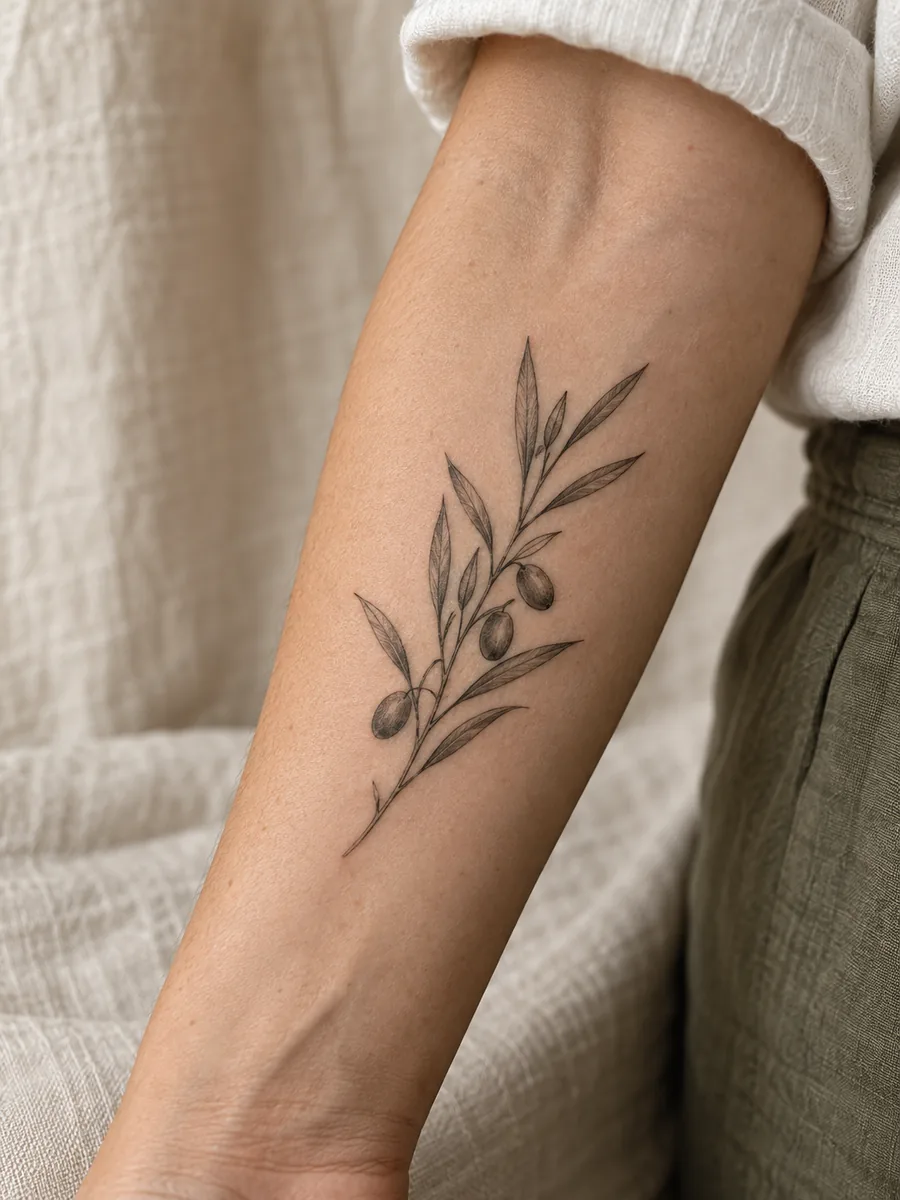
Choosing between the inner and outer forearm is partly a question of viewpoint. Which part do you want to see yourself, and which part should face outward when your arm rests naturally? A reference photographed with a carefully posed arm may not answer either question.
Start in a relaxed position
Let your arm hang at your side, then turn your palm upward and downward. Notice which areas face you and which turn away. Repeat with your elbow bent. The forearm does not present one fixed flat surface throughout the day.
Use these positions to explain your priorities to your artist. You may care most about your own view while reading or working, or about how the tattoo sits when you stand naturally.
Inner forearm considerations
A lengthwise design can be easy to view with your palm up. A stem, phrase, or narrow symbol may follow that direction. Check whether you still like the orientation when the arm is at your side; a design chosen only from your seated viewpoint can feel different in a mirror.
Outer forearm considerations
A design here may have a different outward-facing presence. Wider motifs can turn around the sides of the arm, so confirm which parts should remain visible together. A butterfly’s wings or a round flower head may need adjustment to preserve the view you want.
Orientation is a separate choice
Placement does not automatically determine which way lettering or a directional symbol should face. Compare both orientations on the stencil. Ask yourself which viewing position matters most rather than looking for a universal rule.
Consider neighboring elements
A watch can cover the lower end of a design. A rolled sleeve can change its visible length. Existing tattoos may make one side feel more balanced than the other. Bring these details into the consultation before finalizing the drawing.
If you expect more work on the arm, discuss whether this piece should anchor the arrangement or leave a clear area for a future design.
Do not choose from a pain ranking alone
Personal experiences vary, and a generic placement chart cannot assess your individual situation. Ask the artist about the process and take health questions to a qualified professional. This guide compares visual placement, not medical suitability.
Useolive branch ideasto compare long compositions andcrescent moon ideasfor compact ones. Browsearm and wrist guideswith your preferred everyday view in mind.