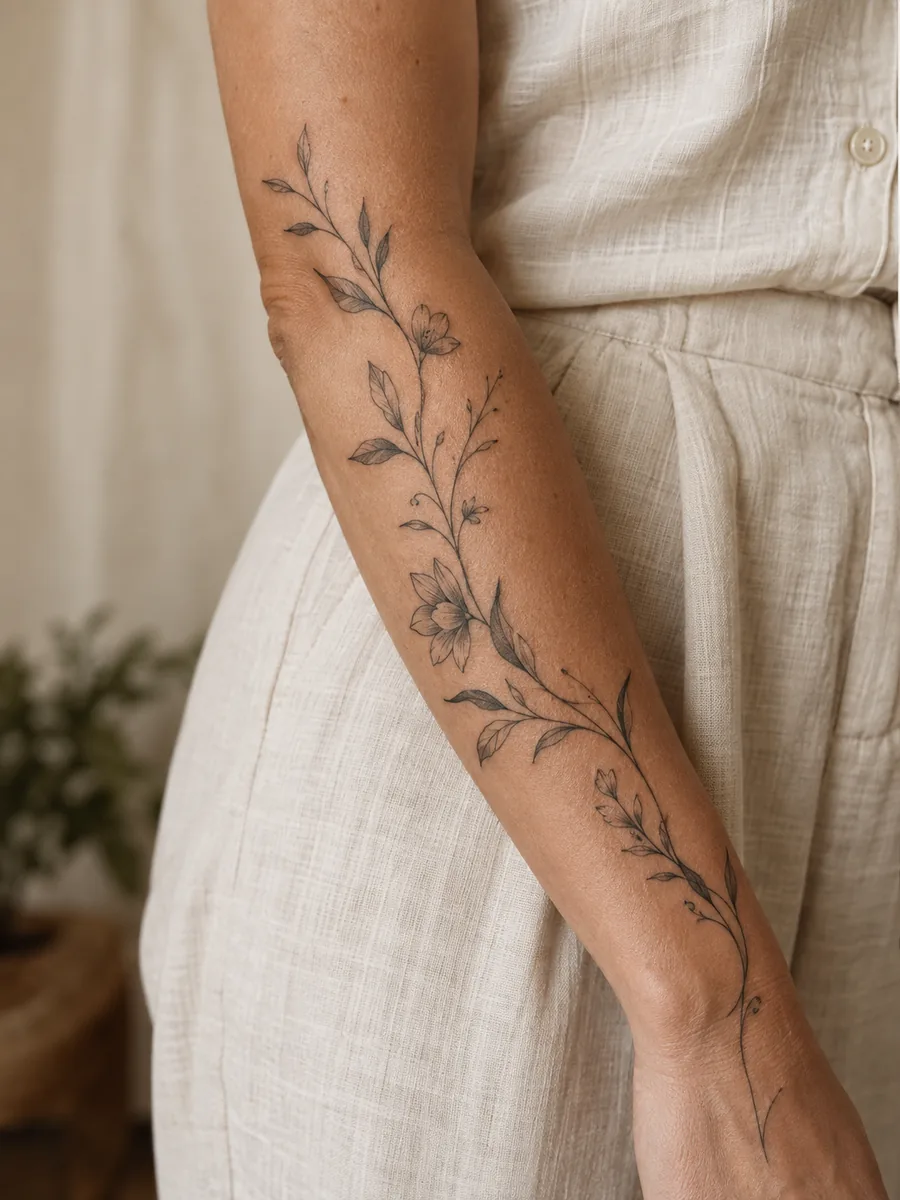
A tattoo collection can feel connected without making every piece identical. The connection might be line weight, subject matter, a limited palette, or simply the amount of space you leave between tattoos. Decide which kind of consistency matters to you.
Choose an organizing idea
Shared subjects:plants, landscapes, or personal objects can create a loose theme while allowing different compositions.
Shared treatment:similar outlines or restrained shading can connect unrelated subjects.
Shared spacing:distinct pieces can feel intentional when the gaps between them have a considered rhythm.
You can combine these approaches, but you do not need a rule so strict that it prevents future choices you enjoy.
Look at the whole area
Photograph the arm or leg from several normal angles. Notice where the existing pieces are visually heavy and where there is open space. Do not plan only from close-ups of individual tattoos.
A small piece near a large one can act as an accent. Several equally sized pieces can create a more even pattern. Neither is automatically better; compare the effect before filling every available gap.
Decide whether you want a focal point
One larger piece can anchor the collection. If you prefer a patchwork arrangement, the relationship between separate silhouettes may matter more than a central subject. Tell your artist which direction you are considering.
Mix styles deliberately
A bold piece beside delicate linework can create useful contrast. To avoid an accidental feeling, consider repeating one detail elsewhere: a curve, a dark area, or a similar amount of open skin. You do not need to redraw existing tattoos to make every line match.
Leave some space unresolved
Empty areas are options, not defects. Waiting can help you understand how you feel about the current arrangement. Avoid adding tiny filler motifs solely because a gap exists.
If you expect a future larger composition, discuss that with the artist before placing a small piece in the middle of the area it may need.
Keep a useful reference folder
Separate references into subject, placement, and visual treatment. Add a note about what you like in each image. This prevents a folder of attractive tattoos from becoming an unclear request to copy several artists at once.
Useolive branch compositionsto compare movement andsmall crescentsto compare compact accents. Thediscovery categoryincludes varied approaches, and the planning principles apply to anyone building a collection.