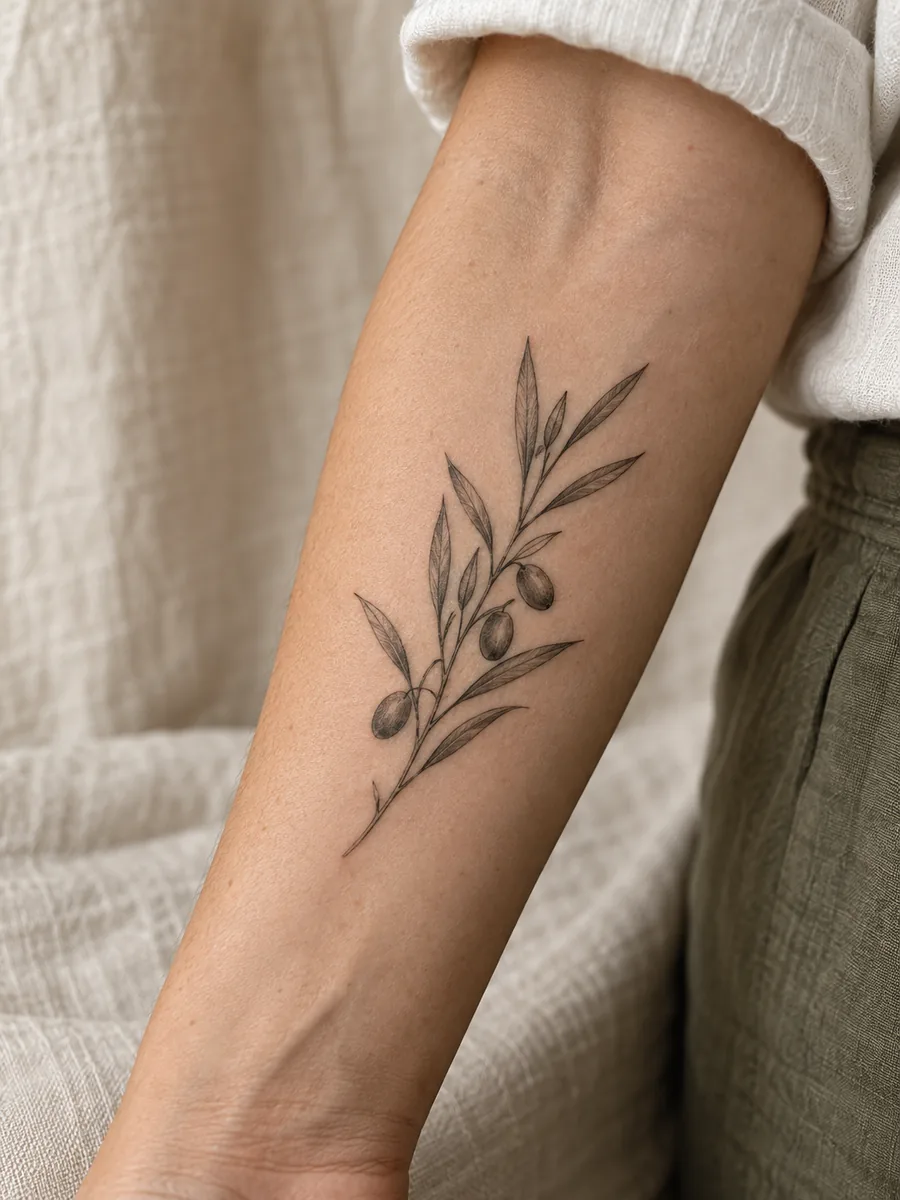
A useful tattoo consultation begins with preferences you can describe. A folder of saved images helps, but your artist should not have to guess which part of each image you like. Separate the subject, the drawing style, and the placement before the conversation.
Bring three kinds of reference
Subject:a photograph of the plant, object, or place you want to interpret. Use your own reference where possible and avoid assuming another artist’s tattoo can simply be copied.
Line treatment:an example showing whether you prefer open outlines, light shading, or a stronger main contour. Explain the feature you like, rather than asking for someone else’s complete design.
Placement:a view of the relevant body area. If you are consulting remotely, include the whole area and nearby tattoos, not just a close crop.
Write a short brief
Try: “A single botanical stem on my outer forearm, mostly open leaves, no lettering, and enough room to add another piece later.” This gives the artist a clear direction while leaving room for an original composition.
List the features you consider essential and the ones you are flexible about. A particular flower may be essential; the exact number of leaves may not be.
Ask about comparable healed work
Fresh photographs show one stage of a tattoo. Ask whether the artist has healed examples of similar linework, scale, and placement. Look at ordinary-distance photographs as well as close-ups. Avoid treating one image as a guarantee of your own result.
Discuss size as a design decision
Instead of asking for the smallest possible version, ask what the artist would simplify at your preferred size. Compare a larger detailed version with a smaller simplified one. Clarify which gaps and letter spaces need room.
Understand the appointment process
Ask when you will see the design, what changes can be discussed at the stencil stage, how the studio handles deposits and rescheduling, and what preparation instructions it provides. These policies vary, so confirm them directly with the studio rather than relying on a general guide.
Health questions and individual suitability belong with the appropriate professional. Be honest with your artist about relevant concerns and seek qualified medical advice where needed; an inspiration website cannot assess your situation.
Leave with a shared understanding
Before booking, you should understand the proposed subject, approximate size, placement, and next steps. You do not need to resolve every line in advance, but you should feel able to ask questions without pressure.
Use ourolive branch guideto practice describing composition, and browsefine line ideasto identify the specific visual treatment you prefer.