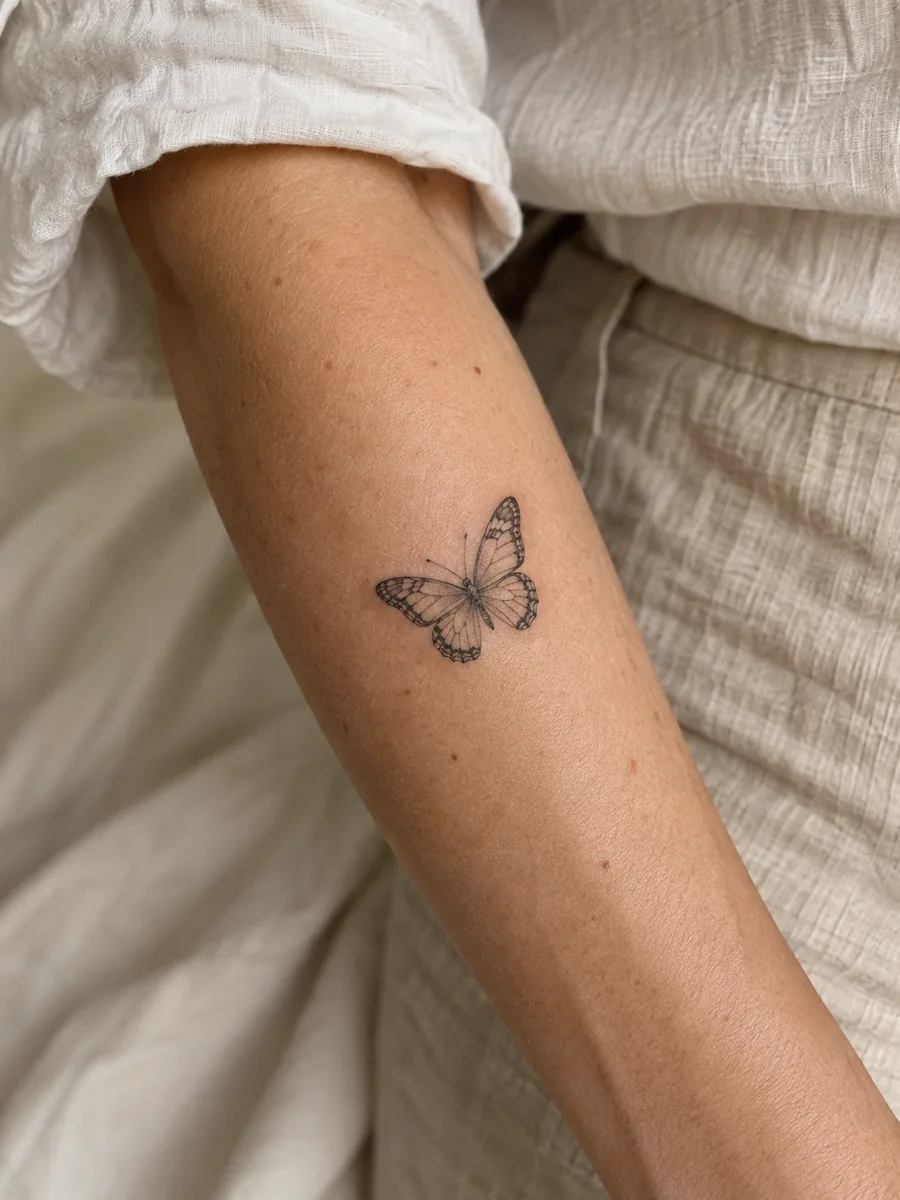
Two butterfly tattoos can use almost the same wing shape and still feel completely different. The difference often comes from where the ink is concentrated. Decide whether you want the silhouette, the wing pattern, or the sense of volume to lead.
Outline-focused butterflies
A clear outer contour with a few interior marks leaves plenty of skin visible. This can create a light drawing, but the wing shape has to do much of the work. Compare the outline without any decoration before adding veins or dots.
If you want a small tattoo, ask which markings can remain legible at that scale rather than copying every line from a larger reference.
Blackwork contrast
Filled areas can emphasize the outer edges or create a strong pattern within the wings. Open skin becomes part of the pattern, so the gaps need to be planned as carefully as the dark sections.
A bold butterfly does not have to be large, but a complicated pattern may need more space. Let your artist compare a simplified bold version with a larger, more detailed one.
Soft shading
Gradual shading can suggest curved wings or a more dimensional body. Ask where the darkest area should sit and where the wing should stay open. If every part is shaded equally, the silhouette may lose the contrast that first attracted you.
A restrained color approach
You can discuss a limited color accent instead of coloring every section. Show your artist the mood you prefer and ask for relevant examples of their own work. A screen image is not a reliable prediction of how a color will appear on your skin.
Combine styles with a reason
A stronger outer contour with lighter interior marks can create hierarchy. A mostly open wing with one dark tip can create a focal point. Avoid combining techniques simply because each looks appealing in isolation.
If a real species is the reference, identify the markings that matter before simplifying them. If the butterfly is imaginary, allow the pattern to serve the composition without claiming scientific accuracy.
Questions for your artist
- Which element should I notice first?
- What will you simplify at this size?
- Where should the largest open areas remain?
- Can I see healed examples of similar work?
Comparebutterfly tattoo ideasby treatment as well as subject. For a clear example of a filled silhouette, look at thecrescent moon guide; the same contrast question can help you evaluate a much more detailed wing.